Spring Boot Microservices Roadmap: What to Learn and In What Order
backend
11 min read
Spring Boot Microservices Roadmap: What to Learn and In What Order
A practical roadmap for learning microservices with Spring Boot. Covers the exact tools, patterns, and skills you need - in the right order - from monolith to distributed systems.

Published By: Nelson Djalo | Date: March 28, 2026
Introduction
Microservices are everywhere in job postings, architecture discussions, and tech interviews. But most developers approach them wrong - they jump straight into service discovery and message brokers without understanding the fundamentals that make distributed systems work.
This spring boot microservices roadmap lays out the exact order you should learn things. Each stage builds on the previous one, so you're never lost wondering what comes next. Whether you're a Java developer looking to level up or someone transitioning into backend architecture, this is the path.
Table of Contents
- Stage 1: Prerequisites - Java and Spring Boot Basics
- Stage 2: Build a Monolith First (Seriously)
- Stage 3: REST API Design and Service Communication
- Stage 4: Service Discovery
- Stage 5: API Gateway
- Stage 6: Configuration Management
- Stage 7: Inter-Service Communication
- Stage 8: Resilience Patterns
- Stage 9: Distributed Tracing and Observability
- Stage 10: Containerization and Orchestration
- Stage 11: Testing Microservices
- How Long Does This Roadmap Take?
- Conclusion
- FAQ
Stage 1: Prerequisites - Java and Spring Boot Basics
You cannot build microservices with Spring Boot if you don't know Spring Boot. And you cannot learn Spring Boot if your Java is weak. This is the stage most people try to skip, and it's the reason most people get stuck later.
You need solid Java fundamentals: OOP, collections, streams, exception handling, and concurrency basics. Then you need to understand Spring Boot's core - dependency injection, auto-configuration, Spring Data JPA, and how to build a basic REST API. If you can't build a working CRUD application with proper error handling, you're not ready for microservices.
Start with the Spring Boot Master Class if you need a refresher, or check out the Spring Boot Roadmap for a stage-by-stage breakdown of the fundamentals. Get comfortable here first. Everything else in this roadmap depends on it.
Stage 2: Build a Monolith First (Seriously)
This sounds counterintuitive in a microservices roadmap, but hear me out. You need to understand what a monolith looks like - its strengths, its pain points, and where it starts to break down - before you can make good decisions about splitting things into services.
Build a full application as a monolith. An e-commerce platform, a booking system, or a social media backend. Implement multiple domains: users, products, orders, notifications. Use proper layering - controllers, services, repositories. Add validation, error handling, and pagination. Make it work end to end.
The goal is to experience the friction firsthand. When your monolith gets complex enough that changes in one module keep breaking another, you'll understand why microservices exist. That understanding is worth more than any tutorial. The Building APIs with Spring Boot course walks you through building production-quality APIs that form the foundation for everything that follows.
Stage 3: REST API Design and Service Communication
Before you split your monolith into services, you need to get serious about API design. In a monolith, sloppy internal method calls are annoying. In microservices, sloppy APIs between services will ruin your architecture.
Learn proper REST conventions: resource naming, HTTP methods, status codes, pagination, versioning, and HATEOAS (at least know what it is). Understand how to design APIs that are backward compatible - because once other services depend on your endpoints, breaking changes become expensive.
Practice building APIs that are clean, documented (OpenAPI/Swagger), and versioned. Use Spring's RestClient or WebClient to consume APIs from other services. Get comfortable with synchronous HTTP communication before moving to asynchronous patterns later.
Stage 4: Service Discovery
Once you have multiple services running, they need to find each other. Hardcoding URLs works for two services on localhost. It falls apart in production when services scale up, scale down, or move between hosts.
Netflix Eureka is the classic choice in the Spring Cloud ecosystem. Each service registers itself with the Eureka server on startup and queries it to find other services. It handles health checks and deregistration automatically. HashiCorp Consul is another solid option that adds key-value storage and health checking beyond just discovery.
Set up a Eureka server, register two or three services, and have them communicate through the registry instead of hardcoded URLs. Use @LoadBalanced with RestClient to get client-side load balancing for free. This is where your application starts feeling like a real distributed system.
Stage 5: API Gateway
With multiple services running behind service discovery, you don't want clients calling each service directly. An API gateway gives you a single entry point for all client requests, handling routing, authentication, rate limiting, and cross-cutting concerns in one place.
Spring Cloud Gateway is the standard choice here. It's reactive, integrates with Eureka for automatic route resolution, and supports filters for modifying requests and responses. Configure routes that forward requests to the right services based on path patterns. Add global filters for authentication, logging, and CORS.
The gateway is also where you implement rate limiting, request transformation, and circuit breaking at the edge. Get a basic gateway running, route traffic to your services, and add a simple authentication filter. You'll immediately see why every microservices architecture has one.
Stage 6: Configuration Management
When you have five services and each one has its own application.yml with database URLs, API keys, and feature flags, you've got a maintenance problem. Change one database password and you're updating five config files across five repositories.
Spring Cloud Config centralizes all configuration in a single Git repository. Each service pulls its config on startup (and can refresh it at runtime without restarting). You get environment-specific configs (dev, staging, production), versioning through Git history, and encryption for sensitive values.
Set up a Config Server backed by a Git repo. Move your services' configuration there. Use Spring profiles for environment separation. Add @RefreshScope to beans that should pick up config changes at runtime. This is a quality-of-life improvement that pays for itself immediately.
Stage 7: Inter-Service Communication
Synchronous REST calls work, but they create tight coupling between services. If the order service calls the inventory service synchronously and inventory is down, the order fails. In a distributed system, you need asynchronous communication patterns alongside synchronous ones.
REST and gRPC handle synchronous, request-response communication. gRPC is faster and more efficient than REST for service-to-service calls thanks to Protocol Buffers and HTTP/2, but it adds complexity. Use REST for simplicity, gRPC when performance matters.
Apache Kafka and RabbitMQ handle asynchronous, event-driven communication. When a user places an order, you publish an event. The inventory service, notification service, and analytics service each consume that event independently. If one is down, the message waits in the queue. This is how you build resilient, loosely coupled systems. Start with RabbitMQ for simpler use cases, then explore Kafka when you need high-throughput event streaming. My Microservices Course covers both patterns in depth with working examples.
Stage 8: Resilience Patterns
In a distributed system, failure isn't an edge case - it's the normal state. Services go down, networks partition, and databases timeout. If you don't plan for failure, your entire system cascades into collapse when one service has a bad day.
Resilience4j is the go-to library in the Spring Boot ecosystem (it replaced Netflix Hystrix). Implement the circuit breaker pattern first: when a downstream service fails repeatedly, the circuit opens and returns a fallback response instead of waiting and timing out. Add retries with exponential backoff for transient failures. Use rate limiters to protect services from being overwhelmed. Implement bulkheads to isolate failures and prevent one slow service from consuming all your threads.
Configure Resilience4j with Spring Boot annotations: @CircuitBreaker, @Retry, @RateLimiter. Define sensible fallback methods. Monitor circuit breaker states through actuator endpoints. This is one of the most important stages - resilience patterns are what separate a toy microservices project from a production-ready system.
Stage 9: Distributed Tracing and Observability
When a single request touches five services and something goes wrong, you need to know where it failed and why. Logging in a distributed system without correlation IDs and tracing is like debugging blindfolded.
Micrometer with Micrometer Tracing (the successor to Spring Cloud Sleuth) automatically propagates trace IDs across service boundaries. Every log line includes a trace ID that ties together all the hops a request made. Zipkin or Jaeger collect and visualize these traces, letting you see the full request flow and identify bottlenecks.
Add Micrometer Tracing to your services. Set up a Zipkin server and send traces to it. Look at the trace waterfall view - you'll immediately see which service calls are slow and where errors originate. Combine this with centralized logging (ELK stack or Grafana Loki) and metrics (Prometheus + Grafana) for complete observability. You cannot operate microservices in production without this.
Stage 10: Containerization and Orchestration
Microservices need to be packaged, deployed, and scaled independently. Running five services manually on a single machine doesn't scale. Containers solve packaging. Orchestration solves everything else.
Docker lets you package each service with its dependencies into a portable image. Write a Dockerfile for each service (or use Spring Boot's built-in Buildpacks with mvn spring-boot:build-image). Use Docker Compose for local development to spin up all services, databases, message brokers, and monitoring tools with one command.
Kubernetes handles orchestration in production: automated deployment, scaling, self-healing, service discovery, and load balancing. Learn Pods, Deployments, Services, ConfigMaps, and Secrets. Deploy your microservices to a local cluster (Minikube or kind) first, then a managed service (EKS, GKE, AKS). The Docker for Java Developers course covers containerization specifically for the Spring Boot ecosystem.
Stage 11: Testing Microservices
Testing a monolith is straightforward. Testing a distributed system is a different challenge entirely. You need strategies that verify both individual services and the interactions between them.
Unit tests and integration tests still matter for each service. Use Testcontainers to spin up real databases, message brokers, and other dependencies in Docker during tests - no more mocking your entire infrastructure. This gives you confidence that your service actually works with real dependencies.
Contract testing with Spring Cloud Contract or Pact verifies that services agree on API contracts. The producer defines a contract, and both producer and consumer test against it. When someone changes an API, contract tests catch the breaking change before it reaches production. Add end-to-end tests sparingly (they're slow and brittle), and invest heavily in contract tests and integration tests with Testcontainers. This is how you ship with confidence in a microservices architecture.
How Long Does This Roadmap Take?
Be realistic. If you're starting from solid Spring Boot fundamentals, expect 4-6 months of consistent learning to work through this roadmap. If you're starting from Java basics, add another 2-3 months for prerequisites. The key is to build projects at each stage, not just watch tutorials. Deploy something. Break it. Fix it.
Conclusion
The spring boot microservices learning roadmap is long, but it's linear. Each stage gives you a concrete skill that feeds into the next. Don't skip ahead. Don't start with Kubernetes when you haven't built a clean REST API yet. Don't add Kafka when you haven't tried synchronous communication first.
Start where you are. Build real projects. And when you're ready to go deeper, the Microservices Course covers this entire path with hands-on projects, from building your first service to deploying a full distributed system on Kubernetes.
The demand for developers who understand microservices java architecture isn't going anywhere. This roadmap gives you the path. You just have to walk it.
FAQ
Do I need to know Spring Boot before learning microservices?
Yes, absolutely. Microservices built with Spring Boot require a solid understanding of dependency injection, Spring Data, REST controllers, and Spring Security. Trying to learn microservices and Spring Boot simultaneously will slow you down in both. Get the fundamentals right first with the Spring Boot Master Class.
Should I start with Docker or Kubernetes?
Start with Docker. Learn to containerize a single Spring Boot application, then use Docker Compose to run multiple services locally. Kubernetes only makes sense once you have multiple containerized services that need orchestration. Jumping to Kubernetes too early adds complexity without teaching you the fundamentals of containerization.
Is gRPC necessary for Spring Boot microservices?
Not necessary, but valuable for performance-critical service-to-service communication. Most teams start with REST for simplicity and introduce gRPC selectively where latency and throughput matter. You can build a fully functional microservices architecture using only REST and asynchronous messaging.
What's the difference between Kafka and RabbitMQ for microservices?
RabbitMQ is a traditional message broker - great for task queues, routing, and request-reply patterns. Kafka is a distributed event streaming platform built for high-throughput, event sourcing, and log-based architectures. Start with RabbitMQ for simpler messaging needs. Move to Kafka when you need event replay, high throughput, or stream processing.
Can I get a microservices job without Kubernetes experience?
Yes, many companies run microservices without Kubernetes - using ECS, Cloud Run, or even plain Docker deployments. However, Kubernetes is increasingly expected for senior and architect-level roles. Having at least basic Kubernetes knowledge (deploying services, scaling, ConfigMaps) makes you a stronger candidate and demonstrates you understand production operations.
Related Articles
9 Books That Made Me a Better Software Engineer (Not the Usual List)
Skip the generic recommendations. These 9 books changed how I write code, lead teams, and think about systems - from Clean Code to books most devs haven't heard of.

How to Become a Java Full Stack Developer in 2025 (Step-by-Step)
The exact skills, tools, and learning order to go from zero to hired as a Java full stack developer. Covers Spring Boot, React, databases, Docker, and what employers actually look for.
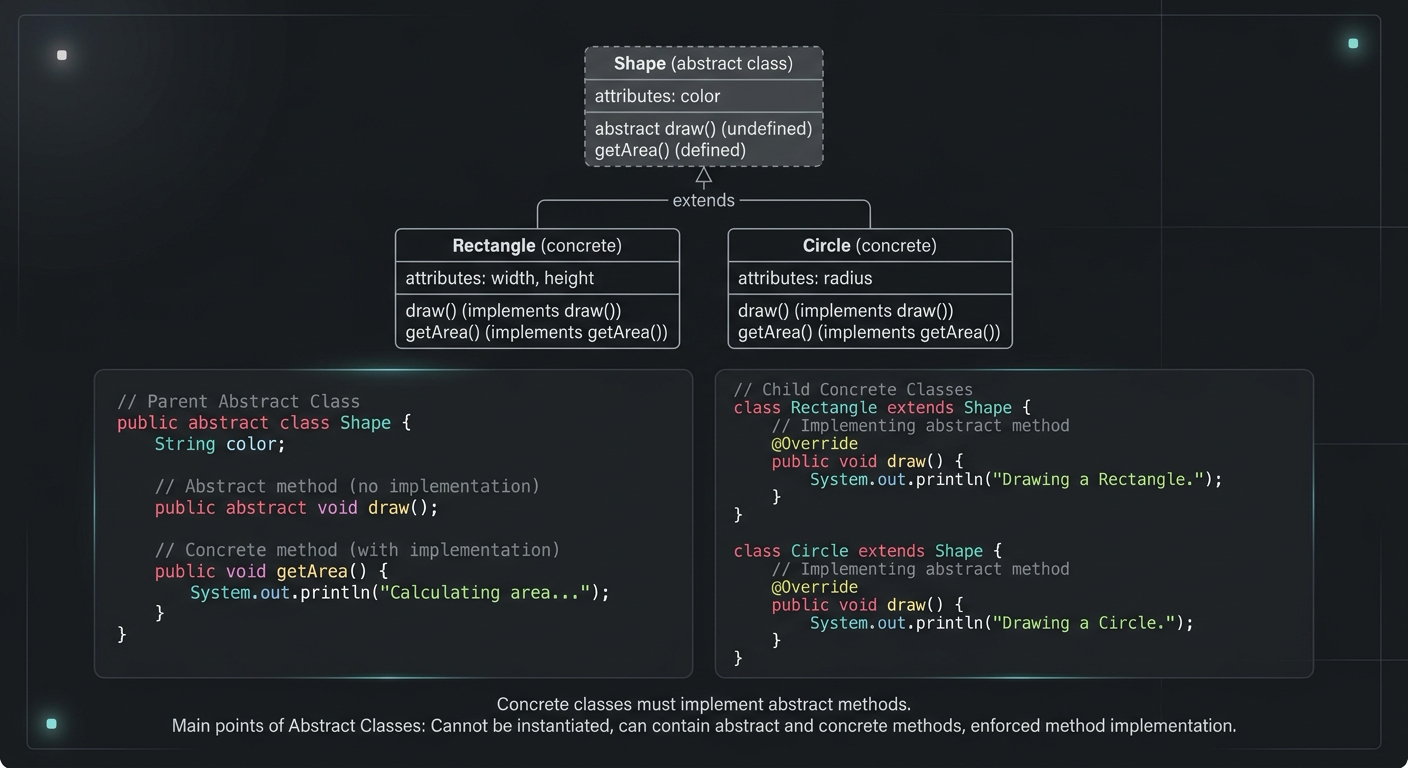
Abstract Class in Java (With Real-World Examples)
Abstract classes in Java are one of the most misunderstood OOP concepts. Here's a practical guide with real-world examples, code you can actually use, and the mistakes most devs make.
Your Career Transformation Starts Now
Join thousands of developers mastering in-demand skills with Amigoscode. Try it free today.