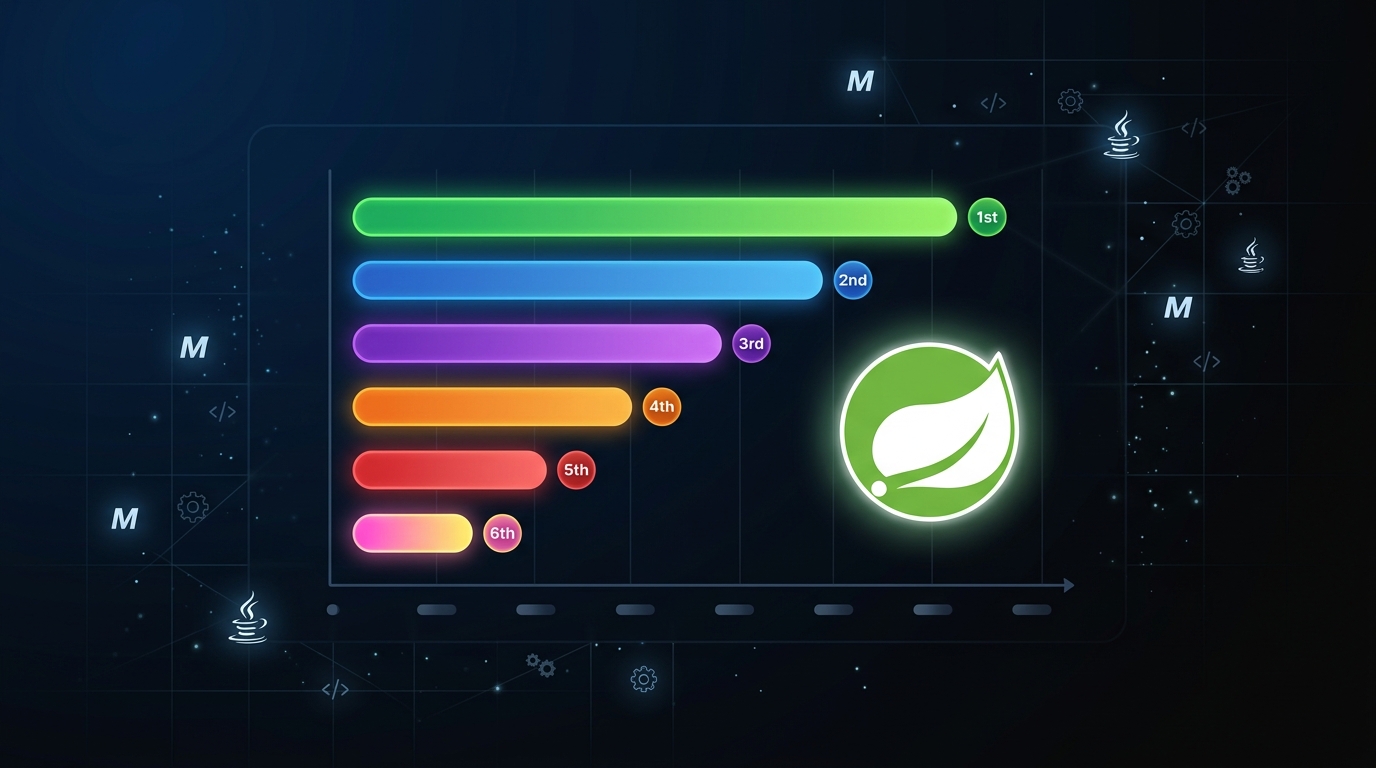
Spring Boot Starter Popularity: Which Starters Are Most Used in 2026?
backend
7 min read
Spring Boot Starter Popularity: Which Starters Are Most Used in 2026?
We analyzed Maven Central download data and Spring Initializr usage to find the most popular Spring Boot starters. Here's what real projects actually use - with numbers.
Published By: Nelson Djalo | Date: March 10, 2026
Introduction
Every Spring Boot project starts the same way - you pick your starters. But which ones does everyone else pick? I dug into Maven Central download data and Spring Initializr usage patterns to find out what starters real developers actually use in production.
No opinions, just data.
Table of Contents
- The Top 10 Most Used Spring Boot Starters
- 1. spring-boot-starter-web
- 2. spring-boot-starter-test
- 3. spring-boot-starter-data-jpa
- 4. spring-boot-starter-security
- 5. spring-boot-starter-validation
- 6. spring-boot-starter-actuator
- 7. spring-boot-starter-data-redis
- 8. spring-boot-starter-webflux
- 9. spring-boot-starter-oauth2-client
- 10. spring-boot-starter-mail
- Spring Boot Starter Usage by Category
- How Maven Central Downloads Compare
- Which Spring Boot Version Is Most Used in 2026?
- What This Data Means for Your Projects
- The Rise of Spring AI and New Starters
- FAQs
- Conclusion
The Top 10 Most Used Spring Boot Starters
Based on Maven Central download statistics and Spring Initializr usage data, here are the most popular Spring Boot starters ranked by adoption:
1. spring-boot-starter-web
The undisputed king. Used in the vast majority of Spring Boot projects. If you're building anything with HTTP endpoints - REST APIs, web apps, microservices - you're pulling this one in.
What it includes:
- Embedded Tomcat server
- Spring MVC
- Jackson for JSON serialization
- Bean validation
<dependency>
    <groupId>org.springframework.boot</groupId>
    <artifactId>spring-boot-starter-web</artifactId>
</dependency>
According to Spring Initializr statistics, spring-boot-starter-web appears in roughly 70-80% of all generated projects. That makes it the single most selected dependency when developers create a new Spring Boot app.
2. spring-boot-starter-test
Included by default in every Spring Boot project generated via Spring Initializr. It bundles JUnit 5, Mockito, AssertJ, and Spring's test utilities.
<dependency>
    <groupId>org.springframework.boot</groupId>
    <artifactId>spring-boot-starter-test</artifactId>
    <scope>test</scope>
</dependency>
Since it's auto-included, its download numbers are essentially equal to spring-boot-starter-web. Every project gets it whether you use it or not.
3. spring-boot-starter-data-jpa
The go-to for database access. Bundles Hibernate as the JPA implementation, Spring Data JPA for repository abstractions, and HikariCP for connection pooling.
<dependency>
    <groupId>org.springframework.boot</groupId>
    <artifactId>spring-boot-starter-data-jpa</artifactId>
</dependency>
Roughly 40-50% of Spring Initializr projects include this starter. Most production apps need a database, and JPA is the default choice for relational data.
If you're new to Spring Data JPA, check out our Spring Data JPA course for a hands-on deep dive.
4. spring-boot-starter-security
Security matters, and this starter shows up in about 25-30% of projects. It provides Spring Security's authentication and authorization framework with sensible defaults.
<dependency>
    <groupId>org.springframework.boot</groupId>
    <artifactId>spring-boot-starter-security</artifactId>
</dependency>
Out of the box, it secures all endpoints with basic authentication and generates a random password on startup. Most teams customize this with JWT, OAuth2, or custom authentication providers.
Learn how to secure your APIs properly in our Spring Boot Security course.
5. spring-boot-starter-validation
Used for request validation with Jakarta Bean Validation annotations like @NotBlank, @Email, @Size, and @Valid.
<dependency>
    <groupId>org.springframework.boot</groupId>
    <artifactId>spring-boot-starter-validation</artifactId>
</dependency>
This used to be bundled with spring-boot-starter-web, but since Spring Boot 2.3 it's a separate dependency. Any API that validates request bodies needs this.
6. spring-boot-starter-actuator
Production monitoring and health checks. Exposes endpoints like /actuator/health, /actuator/metrics, and /actuator/info.
<dependency>
    <groupId>org.springframework.boot</groupId>
    <artifactId>spring-boot-starter-actuator</artifactId>
</dependency>
About 20-25% of Initializr projects include Actuator. In production environments, that number is likely higher - it's one of those dependencies you add later when you realize you need monitoring.
7. spring-boot-starter-data-redis
Redis integration for caching, session management, and pub/sub messaging.
<dependency>
    <groupId>org.springframework.boot</groupId>
    <artifactId>spring-boot-starter-data-redis</artifactId>
</dependency>
Growing steadily as more teams adopt Redis for caching layers in their microservices. Pairs well with @Cacheable annotations for declarative caching.
8. spring-boot-starter-webflux
The reactive alternative to spring-boot-starter-web. Uses Netty instead of Tomcat and supports non-blocking I/O.
<dependency>
    <groupId>org.springframework.boot</groupId>
    <artifactId>spring-boot-starter-webflux</artifactId>
</dependency>
Adoption is growing but still niche - roughly 5-10% of projects. Most teams stick with the traditional servlet-based approach unless they have specific high-concurrency requirements.
9. spring-boot-starter-oauth2-client
OAuth2 login integration for connecting with Google, GitHub, Facebook, and other identity providers.
<dependency>
    <groupId>org.springframework.boot</groupId>
    <artifactId>spring-boot-starter-oauth2-client</artifactId>
</dependency>
Social login is increasingly common, and this starter makes it straightforward. It works alongside spring-boot-starter-security for authentication flows.
10. spring-boot-starter-mail
Email sending capabilities using JavaMail.
<dependency>
    <groupId>org.springframework.boot</groupId>
    <artifactId>spring-boot-starter-mail</artifactId>
</dependency>
Nearly every production app sends emails at some point - password resets, notifications, reports. This starter handles the SMTP configuration and provides a clean JavaMailSender API.
Spring Boot Starter Usage by Category
Here's how starters group by function:
Web & API
| Starter | Relative Popularity |
|---|---|
| spring-boot-starter-web | Very High |
| spring-boot-starter-webflux | Growing |
| spring-boot-starter-websocket | Low |
| spring-boot-starter-graphql | Growing |
Data Access
| Starter | Relative Popularity |
|---|---|
| spring-boot-starter-data-jpa | Very High |
| spring-boot-starter-data-mongodb | Medium |
| spring-boot-starter-data-redis | Medium |
| spring-boot-starter-data-elasticsearch | Low |
Security
| Starter | Relative Popularity |
|---|---|
| spring-boot-starter-security | High |
| spring-boot-starter-oauth2-client | Medium |
| spring-boot-starter-oauth2-resource-server | Medium |
Messaging
| Starter | Relative Popularity |
|---|---|
| spring-boot-starter-amqp (RabbitMQ) | Medium |
| spring-kafka | Growing |
Operations
| Starter | Relative Popularity |
|---|---|
| spring-boot-starter-actuator | High |
| spring-boot-starter-cache | Medium |
How Maven Central Downloads Compare
Maven Central download counts give a rough picture of real-world usage. Here's how the top starters compare:
- spring-boot-starter-web - highest downloads by a wide margin
- spring-boot-starter-test - essentially tied with web (auto-included)
- spring-boot-starter-data-jpa - about half the downloads of web
- spring-boot-starter-security - roughly a third of web
- spring-boot-starter-actuator - close to security
The gap between #1 and #5 is significant. spring-boot-starter-web is so dominant that it's almost synonymous with "Spring Boot project."
Which Spring Boot Version Is Most Used in 2026?
Based on Maven Central download patterns:
- Spring Boot 3.4.x - the most widely used version in production as of early 2026
- Spring Boot 4.0 - released November 2025, adoption is growing but most teams haven't migrated yet
- Spring Boot 3.2.x / 3.3.x - still running in many production environments
- Spring Boot 2.7.x - officially end-of-life, but some legacy projects remain
If you're starting a new project, use Spring Boot 3.4.x for stability or Spring Boot 4.0 if you want the latest features and are comfortable with a newer release.
Check our Spring Boot Roadmap for a complete guide on what to learn with Spring Boot.
What This Data Means for Your Projects
If you're learning Spring Boot, focus on these starters first:
spring-boot-starter-web- you'll use this in every projectspring-boot-starter-data-jpa- most apps need a databasespring-boot-starter-security- security is non-negotiablespring-boot-starter-test- write tests from day onespring-boot-starter-validation- validate all input
If you're building production apps, add:
6. spring-boot-starter-actuator - monitoring and health checks
7. spring-boot-starter-data-redis - caching layer
8. spring-boot-starter-mail - transactional emails
Our Spring Boot Master Class covers all of these starters with hands-on projects.
The Rise of Spring AI and New Starters
One trend worth watching: Spring AI starters are gaining traction fast in 2026. As more teams integrate AI capabilities into their Java applications, starters like spring-ai-openai-spring-boot-starter are appearing in more projects.
This mirrors the broader industry trend of AI integration becoming a standard part of application development. If you're building new Spring Boot apps in 2026, AI-powered features are worth exploring.
FAQs
Which Spring Boot starter should I learn first?
spring-boot-starter-web. It's used in the vast majority of projects and teaches you the core concepts of Spring Boot development - controllers, dependency injection, auto-configuration, and embedded servers.
Do I need all these starters in one project?
No. Start with web and test, then add starters as your project needs them. A simple REST API might only need web, data-jpa, and validation. Don't add dependencies you don't use.
Is spring-boot-starter-webflux replacing spring-boot-starter-web?
No. Reactive programming with WebFlux solves specific problems (high concurrency with limited threads), but the traditional servlet-based approach works fine for most applications. Use web unless you have a clear reason to go reactive.
How often should I update my Spring Boot version? Follow the latest patch releases within your minor version (e.g., 3.4.x). For major version upgrades (3.x to 4.x), plan a migration when the new version has had a few patch releases and your dependencies support it.
Where can I check Maven Central download statistics? Visit mvnrepository.com and search for any starter. It shows download trends, version history, and usage counts. For Spring Initializr statistics, check the Spring Blog for periodic reports.
Conclusion
spring-boot-starter-web dominates, JPA is the default for data access, and security adoption is growing. Focus on the top 5 starters first - they cover 90% of what you'll build.
Ready to master Spring Boot? Our Spring Boot Roadmap maps out every skill you need, and the Spring Boot Master Class gets you building real projects from day one.
Related Articles
9 Books That Made Me a Better Software Engineer (Not the Usual List)
Skip the generic recommendations. These 9 books changed how I write code, lead teams, and think about systems - from Clean Code to books most devs haven't heard of.

How to Become a Java Full Stack Developer in 2025 (Step-by-Step)
The exact skills, tools, and learning order to go from zero to hired as a Java full stack developer. Covers Spring Boot, React, databases, Docker, and what employers actually look for.
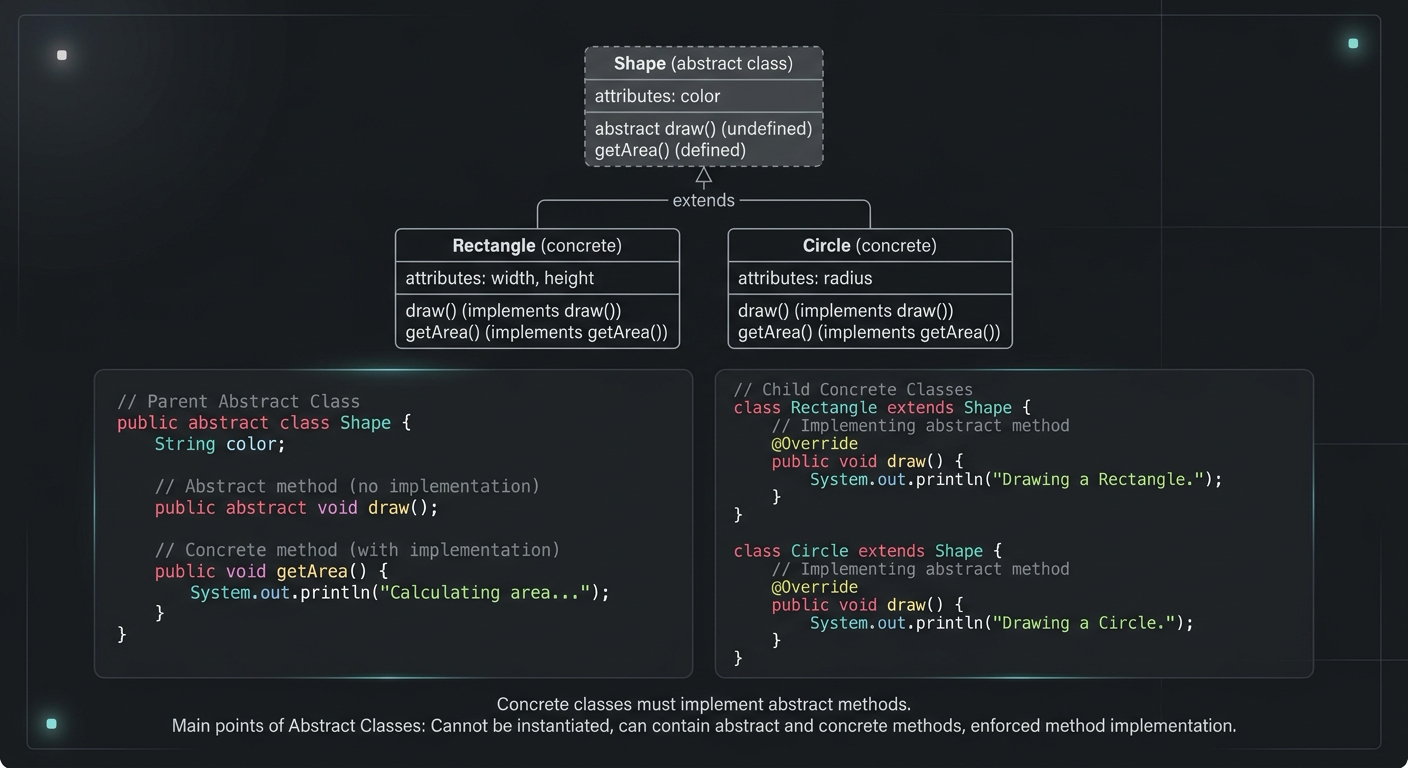
Abstract Class in Java (With Real-World Examples)
Abstract classes in Java are one of the most misunderstood OOP concepts. Here's a practical guide with real-world examples, code you can actually use, and the mistakes most devs make.
Your Career Transformation Starts Now
Join thousands of developers mastering in-demand skills with Amigoscode. Try it free today.