Should I Learn Java or JavaScript First? (Honest Advice for 2026)
backend
10 min read
Should I Learn Java or JavaScript First? (Honest Advice for 2026)
Java or JavaScript - which one should you learn first? The answer depends on what you want to build, where you want to work, and how you learn best. Here's honest advice based on job data and real career paths.

Published By: Nelson Djalo | Date: April 2, 2026
Table of Contents
- The Short Answer
- Quick Comparison
- When You Should Pick Java
- When You Should Pick JavaScript
- Job Market Comparison
- Salary Comparison
- The Truth: You Will Learn Both Eventually
- My Recommendation Based on Your Goal
- Conclusion
- FAQ
The Short Answer
If you want to build websites and see results fast, start with JavaScript. If you want to work in enterprise backend systems, build Android apps, or aim for large corporate engineering teams, start with Java.
Both are excellent first languages. Neither is a wrong choice. But one will probably fit your goals better than the other, and that matters when you are putting in hundreds of hours of learning. Let me break it down.
Quick Comparison
| Java | JavaScript | |
|---|---|---|
| Type system | Static (compile-time checks) | Dynamic (runtime flexibility) |
| Runtime | JVM (runs anywhere JVM is installed) | Browser + Node.js |
| Primary use cases | Backend APIs, enterprise systems, Android | Web apps (frontend + backend), full-stack |
| Job market | Strong in finance, healthcare, government, big tech | Strong in startups, agencies, SaaS, big tech |
| Average salary (US, 2026) | $110K - $145K | $105K - $140K |
| Learning curve | Steeper upfront (types, OOP, boilerplate) | Gentler start, but quirks hit you later |
| Time to first project | Days to weeks | Hours to days |
| Community & ecosystem | Mature, stable, huge library ecosystem | Massive, fast-moving, NPM is the largest package registry |
Salaries overlap heavily. The difference between a Java developer and a JavaScript developer has far more to do with experience and specialisation than the language itself.
For a deeper technical breakdown of syntax, execution, and architecture differences, read our Java vs JavaScript technical comparison.
When You Should Pick Java
You Want to Work in Enterprise or Backend Engineering
Java dominates enterprise software. Banks, insurance companies, healthcare platforms, and government agencies run on Java. If you want a career at companies like JPMorgan, Goldman Sachs, Amazon, or Google, Java is spoken fluently across their backend teams.
The Spring Boot framework makes building production-grade APIs straightforward, and the ecosystem around it (Spring Security, Spring Data, Spring Cloud) covers nearly every backend concern. Check out the Spring Boot Roadmap if this path interests you.
You Want Structure While Learning
Java forces you to think about types, classes, and object-oriented design from day one. Some people find this annoying. Others find it clarifying. If you are the kind of learner who wants the compiler to catch your mistakes early and appreciates clear rules, Java's strictness is a feature, not a bug.
You will write more code to do simple things compared to JavaScript. But you will also build stronger foundations in software engineering principles that transfer to every other language.
You Want to Build Android Apps
Kotlin has taken over as the primary Android language, but Java remains deeply embedded in the Android ecosystem. Many existing Android codebases are Java. Learning Java gives you a direct path into mobile development, and the transition to Kotlin from Java is smooth since both run on the JVM.
You Value Long-Term Stability
Java has been around since 1995 and is not going anywhere. The language evolves slowly and deliberately. Libraries you learn today will still be relevant five years from now. Frameworks do not get replaced every six months. If you prefer a stable, predictable ecosystem, Java delivers.
Our Java for Beginners course walks you through everything from setup to building real projects, designed specifically for people starting from zero.
When You Should Pick JavaScript
You Want to Build for the Web
JavaScript is the language of the web. Every website you visit runs JavaScript in the browser. There is no alternative for client-side web development (TypeScript compiles to JavaScript, so it counts). If your goal is to build web applications, JavaScript is not optional - it is required.
With Node.js on the backend and frameworks like React, Next.js, or Vue on the frontend, you can build a complete application using one language across the entire stack. That is a powerful advantage when you are starting out.
You Want to See Results Quickly
Open a browser console right now and type alert("Hello"). You just ran JavaScript. No installation, no compiler setup, no JVM configuration. The barrier to entry is as low as it gets.
This matters more than people admit. Motivation is the biggest factor in learning to code. If you can build a visible, interactive project in your first weekend, you are far more likely to keep going than if you spend that weekend configuring your IDE and understanding what public static void main(String[] args) means.
You Want Full-Stack Capability With One Language
JavaScript is the only language that runs natively in browsers and on servers. Learn it once and you can build the frontend, the backend, the API, and even mobile apps (React Native) and desktop apps (Electron). You will eventually want to specialise, but starting with one language that covers everything reduces cognitive load.
You Are Targeting Startups or Freelancing
Startups and agencies lean heavily on JavaScript. The speed of development, the size of the ecosystem, and the availability of developers make it the default choice for fast-moving teams. If you want to freelance, build MVPs, or join an early-stage company, JavaScript skills will get you hired faster.
Start with our JavaScript Fundamentals course to build a solid base before jumping into frameworks.
Job Market Comparison
Both languages consistently rank in the top 5 most in-demand programming languages globally. But they serve different segments of the market.
Java jobs tend to concentrate in:
- Financial services and fintech
- Healthcare and insurance
- Government and defence contractors
- Large-scale distributed systems
- Android development
JavaScript jobs tend to concentrate in:
- SaaS companies
- Digital agencies and consultancies
- E-commerce platforms
- Startups across every industry
- Full-stack web development roles
Here is what matters: neither language has a shortage of jobs. Job postings for both languages number in the hundreds of thousands globally. The question is not "can I find a job" - it is "which industry and type of work do I want to do."
If you look at remote work specifically, JavaScript roles tend to appear more frequently because web development lends itself naturally to distributed teams. Java remote roles exist too, but enterprise environments are slower to adopt remote-first cultures.
Salary Comparison
Let us be honest about salaries: they depend on experience, location, company size, and specialisation far more than they depend on language choice.
That said, here are realistic ranges for the US market in 2026:
- Junior Java Developer: $75K - $100K
- Junior JavaScript Developer: $70K - $95K
- Mid-Level Java Developer: $110K - $140K
- Mid-Level JavaScript Developer: $105K - $135K
- Senior Java Developer: $140K - $185K
- Senior JavaScript Developer: $135K - $180K
The gap narrows at senior levels. Specialists in either language (distributed systems in Java, or performance engineering in JavaScript) can command well above these ranges.
The real salary multiplier is not the language. It is the domain expertise you build on top of it.
The Truth: You Will Learn Both Eventually
Here is something nobody tells beginners: the language you start with is not the language you end with. Most professional developers work with multiple languages throughout their careers. Many use both Java and JavaScript regularly.
A backend Java developer will inevitably write some JavaScript for internal tools or frontend work. A JavaScript developer building APIs will encounter Java services in microservice architectures. Polyglot development is the norm, not the exception.
The goal of your first language is not to make a permanent commitment. It is to learn programming fundamentals - loops, conditionals, functions, data structures, debugging, reading documentation - in a context that keeps you engaged long enough to get proficient.
Once you have solid fundamentals in one language, picking up the second takes weeks, not months. The concepts transfer. Only the syntax changes.
If you want a structured path through the full Java ecosystem from basics to production applications, the Java Full Stack Roadmap lays it all out.
My Recommendation Based on Your Goal
"I want to build websites and web apps." Start with JavaScript. It is not optional for web development, and you will see tangible results within days.
"I want to work in backend engineering or enterprise software." Start with Java. The ecosystem, the job market, and the engineering culture all favour it.
"I want to build mobile apps." Start with Java (then move to Kotlin for Android) or JavaScript (React Native for cross-platform).
"I am not sure what I want to build yet." Start with JavaScript. The faster feedback loop keeps motivation high, the skills apply broadly, and you can pivot in any direction. You can always learn Java later - and with programming fundamentals under your belt, it will come faster than you expect.
"I want the highest salary possible." Learn both. Specialise in a domain. The language is the tool; the domain expertise is the differentiator.
Conclusion
Java and JavaScript are both excellent languages with strong job markets, active communities, and long futures ahead of them. The "right" choice depends entirely on your goals, your preferred learning style, and the type of work that excites you.
Pick one. Start building. Stop overthinking.
If you go the Java route, Java for Beginners gives you a structured path from zero to building real applications. If JavaScript is your pick, JavaScript Fundamentals does the same for the web development track.
Either way, you are making a good decision. The worst choice is not starting at all.
FAQ
Is JavaScript different from Java?
Yes, completely. Despite the similar name, Java and JavaScript are different languages with different syntax, different type systems, different runtimes, and different use cases. Java runs on the JVM and is used primarily for backend and Android development. JavaScript runs in browsers and on Node.js and is the foundation of web development. The naming similarity is a historical marketing decision from the 1990s, not a technical relationship.
Is Java or JavaScript better for getting a job?
Both have strong job markets with hundreds of thousands of open positions globally. JavaScript roles are more common in startups, agencies, and web-focused companies. Java roles are more common in enterprise, finance, and large corporations. Neither language will leave you struggling to find work. Pick based on the type of company and work environment you prefer.
Can I learn Java and JavaScript at the same time?
You can, but I would not recommend it as a beginner. Learning one language well gives you a foundation that makes the second language much easier to pick up. Trying to learn both simultaneously often leads to confusion between syntax rules, slower progress, and frustration. Get comfortable with one first, then add the other.
Which is easier to learn, Java or JavaScript?
JavaScript is easier to start with because you need nothing more than a browser, the syntax is more forgiving, and you see visual results immediately. Java has a steeper initial curve due to its type system, class-based structure, and boilerplate. However, JavaScript's flexibility creates its own challenges later - dynamic typing and asynchronous patterns trip up many intermediate developers. Neither language is "easy" to master.
Should I learn TypeScript instead of JavaScript?
TypeScript is JavaScript with static types added on top. It compiles down to JavaScript. Learn JavaScript fundamentals first, then adopt TypeScript - which most professional JavaScript projects use today. Skipping straight to TypeScript without understanding JavaScript will leave gaps in your knowledge. Think of TypeScript as the next step, not a replacement.
Related Articles

9 Books That Made Me a Better Software Engineer (Not the Usual List)
Skip the generic recommendations. These 9 books changed how I write code, lead teams, and think about systems - from Clean Code to books most devs haven't heard of.

How to Become a Java Full Stack Developer in 2025 (Step-by-Step)
The exact skills, tools, and learning order to go from zero to hired as a Java full stack developer. Covers Spring Boot, React, databases, Docker, and what employers actually look for.
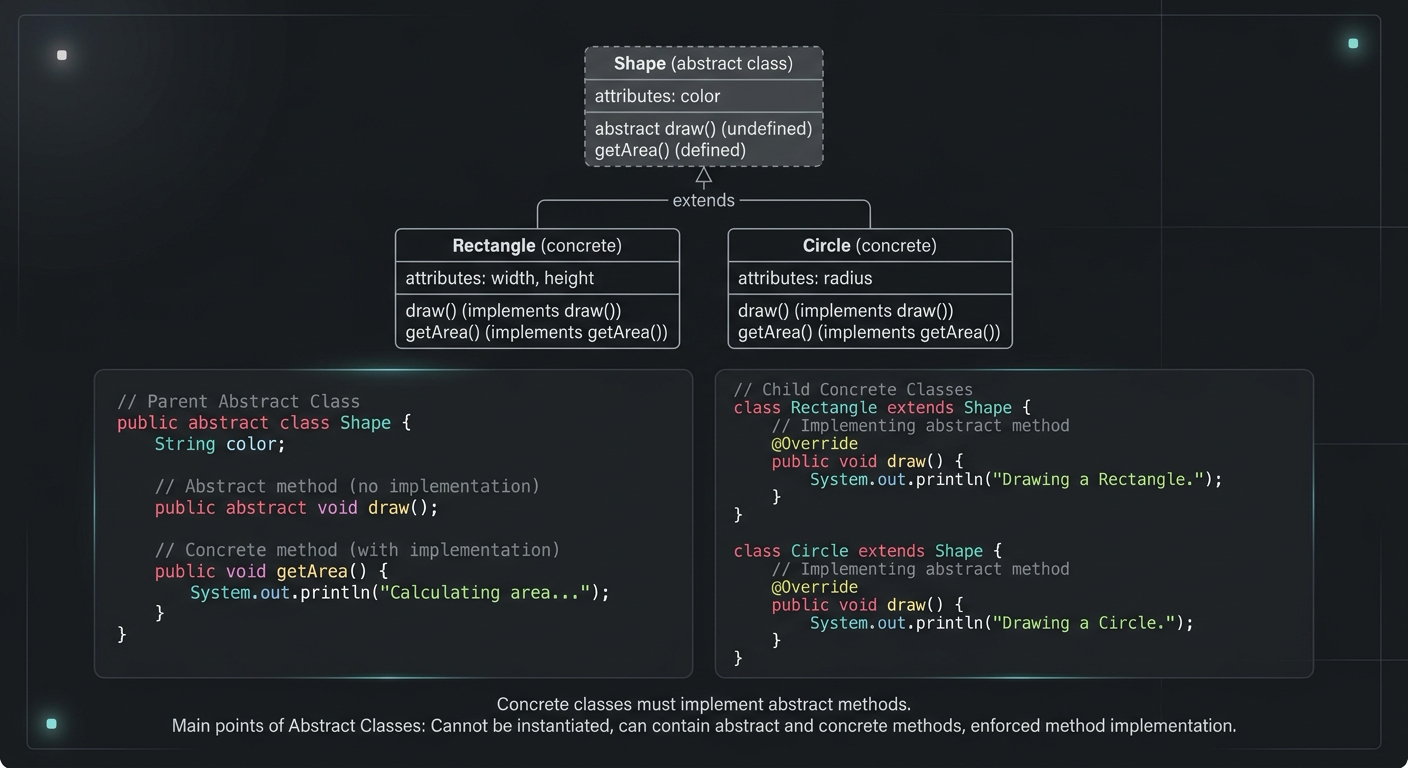
Abstract Class in Java (With Real-World Examples)
Abstract classes in Java are one of the most misunderstood OOP concepts. Here's a practical guide with real-world examples, code you can actually use, and the mistakes most devs make.
Your Career Transformation Starts Now
Join thousands of developers mastering in-demand skills with Amigoscode. Try it free today.